From 1961 to present

The journey of Ellinogermaniki Agogi began 60 years ago, in 1961, when Santi Savva, a graduate of the School of Philosophy at the University of Athens, founded a private primary school together with her brother, Dimitrios Panageas. August 1, 1961, marks the date of the first official document referring to the establishment of the Kindergarten and Primary School. By decision dated November 18, 1961, the school was officially named “Lykeion Elliniki Agogi,” accompanied by the motto “Αιέν Αριστεύειν” (Always Excel), which remains on the school’s emblem to this day.

A small building in Kypseli, at 4 Skyrou & Strofon Street, with just four classrooms for the Primary School and a larger one for the kindergarten, housed the school’s first 33 students and 3 teachers.

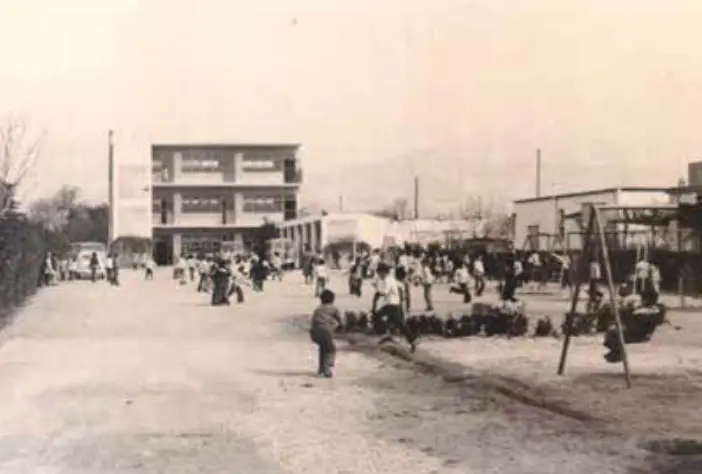
In the autumn of 1966, the school moved to its own premises in Halandri, on Doukissis Plakentias Street, then known as Stylianou Chouta. By September of that year, the school featured five classrooms, a small theatre, and a playground. The number of students reached 100. Year after year, the student population steadily grew, as the school earned the trust and affection of parents.

1961

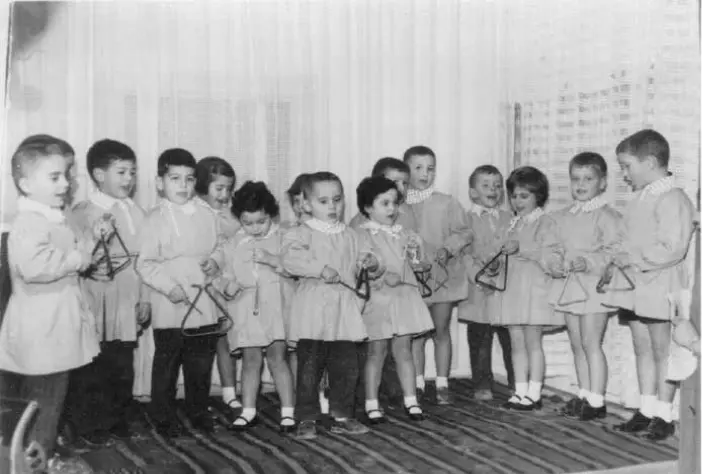
The first students at school

1969 marks an important milestone in the history of the school. A decision was made to orient the curriculum toward German education, and the German language was introduced across all grades. The school was renamed Ellinogermaniki Agogi. As part of a holistic educational approach, the school, in addition to the systematic instruction of Greek subjects, strives to teach the German language, aiming not only to develop language skills but also to introduce students to German culture through social and cultural activities.

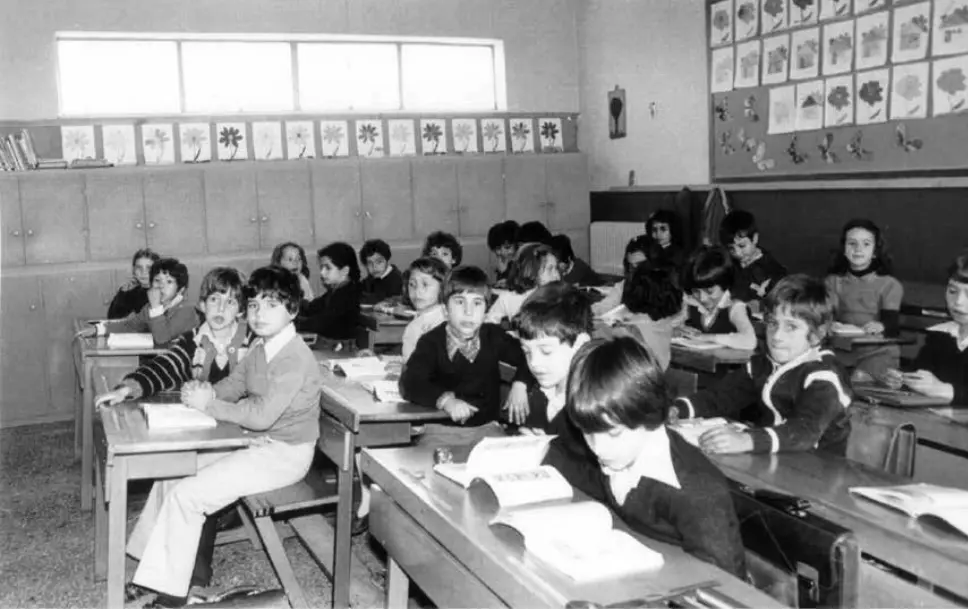
In September 1976, the school expanded to include a Junior High School (Lower Secondary School), enabling students to complete their basic education in one institution. The Junior High School operated in a separate wing of the Halandri complex. At the same time, English was added to the curriculum, ensuring that students graduated with a strong command of two foreign languages.

In 1983, Dimitrios Panageas passed away—too soon to witness the full fruition of his efforts for a well-rounded school.

1969

German language course introduced in all grades

1976

The school acquires a high school

1993

New school complex in Pallini

1994

The first school with a permanent Internet connection

In 1991, Ellinogermaniki Agogi became a fully-fledged educational organization with the establishment and operation of its High School (Upper Secondary School).

In 1993, the rapid increase in the number of Junior High School and High School students led to the decision to create an independent facility for these levels. The second school complex of Ellinogermaniki Agogi was built in Pallini, on a 20,000 m² site. This modern new complex included fully equipped laboratories for Physics, Chemistry, Biology, the Arts, Music, and Computer Science. Additionally, a library, projection room, theatre, indoor gymnasium, indoor swimming pool, and state-of-the-art outdoor athletic facilities enabled students to engage in a wide range of cultural, athletic, and social activities.

From 1993 onward, the school's leadership included, alongside founder Santi Savva, Stelios Savvas, a mathematician with an Ed.M. from Columbia University; Stavros Savvas, a physicist with a PhD in science education; and Stavros Panageas, PhD (MIT), a professor of economics at university level.

In 1994, Ellinogermaniki Agogi pioneered a new era by “opening a window to the world,” as it became the first school in Greece to establish a permanent Internet connection. This access for both teachers and students to the global web marked the school’s international orientation and provided a dynamic platform for communication and information exchange, enabling collaboration with schools and universities abroad. That same year, the school's Research and Development Department was established, aiming to facilitate participation in Greek and international programs focused on the design, implementation, and evaluation of innovative pedagogical methods and applications. To date, the school has participated in more than 300 educational and research projects, either as coordinator or partner, in collaboration with schools, universities, and research institutions in Greece and internationally. In parallel, the school maintains a rich annual publishing activity across all levels of education, with books in Greek, German, and English that enrich and expand classroom materials.

The 1998–1999 school year marked a major success. Students gained the exclusive opportunity among Greek schools to take exams for the German Language Diploma of the Standing Conference of the Ministers of Education and Cultural Affairs of the Federal Republic of Germany (Sprachdiplom der Kultusministerkonferenz). This diploma allows direct admission to German-speaking higher education institutions. This success gave students a significant advantage, broadening their academic horizons. It also validated the school’s orientation and the systematic and effective teaching of the German language.

Priority was always given to university entrance exams in Greece, in which students consistently achieved outstanding results—testimony to the joint efforts of students and teachers and the rewards of systematic preparation. Since 1998, in order to offer students even more options for undergraduate and postgraduate studies, the school has maintained an advisory office for studies abroad, providing guidance for both German and English-speaking universities.

In 2000 and 2004, Ellinogermaniki Agogi participated in national competitions for the development of new school textbooks. On both occasions, the proposals submitted by the school’s writing teams were selected by the Pedagogical Institute. As a result, the science textbooks “Erevno kai Anakalipto” (I Explore and Discover) and later “Physika” (Science) for 5th and 6th grade were published by the Ministry of Education and used in all Greek schools—products of Ellinogermaniki Agogi’s authoring team. In 2004, the school’s proposal for writing German language textbooks for the 1st, 2nd, and 3rd grades of Junior High School was also selected. These books are now taught in all public and private schools across the country.

In the summer of 2001, shortly after the school’s 40th anniversary, its founder Santi Savva passed away. Together with her brother Dimitrios Panageas, she had laid the school’s foundations and set its vision—an institution warm and humane, high in quality and rich in perspective, open to innovation and new challenges.

Since the 2004–2005 school year, Ellinogermaniki Agogi has operated an officially recognized Conservatory, approved by the Ministry of Culture. Staffed by experienced musician-teachers, the Conservatory aims not only to provide modern music education but also to enable young children to engage in musical practice from their earliest steps.

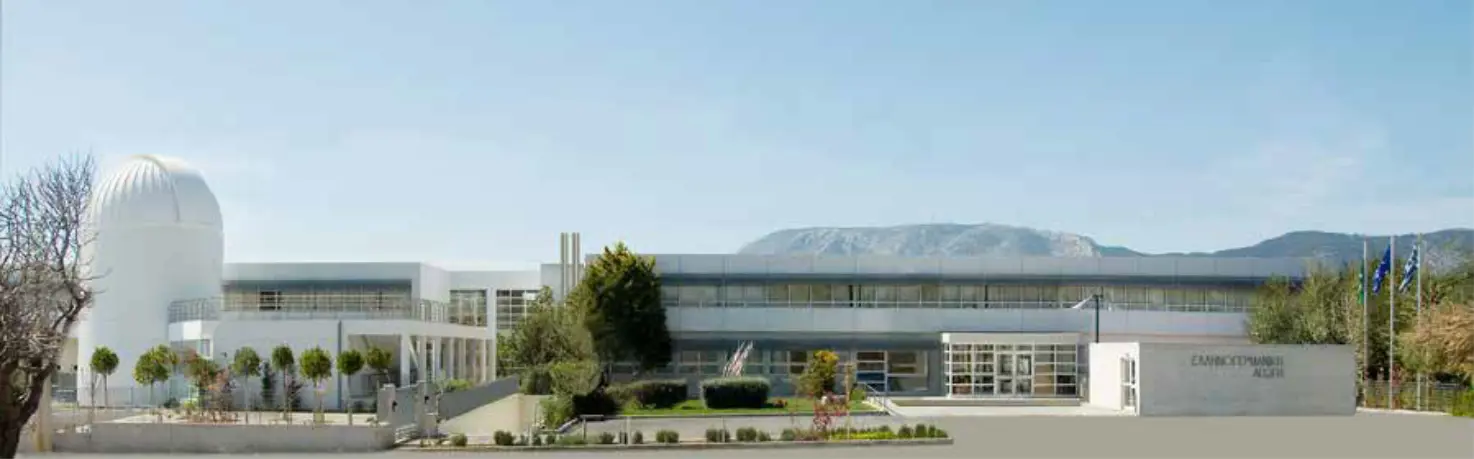
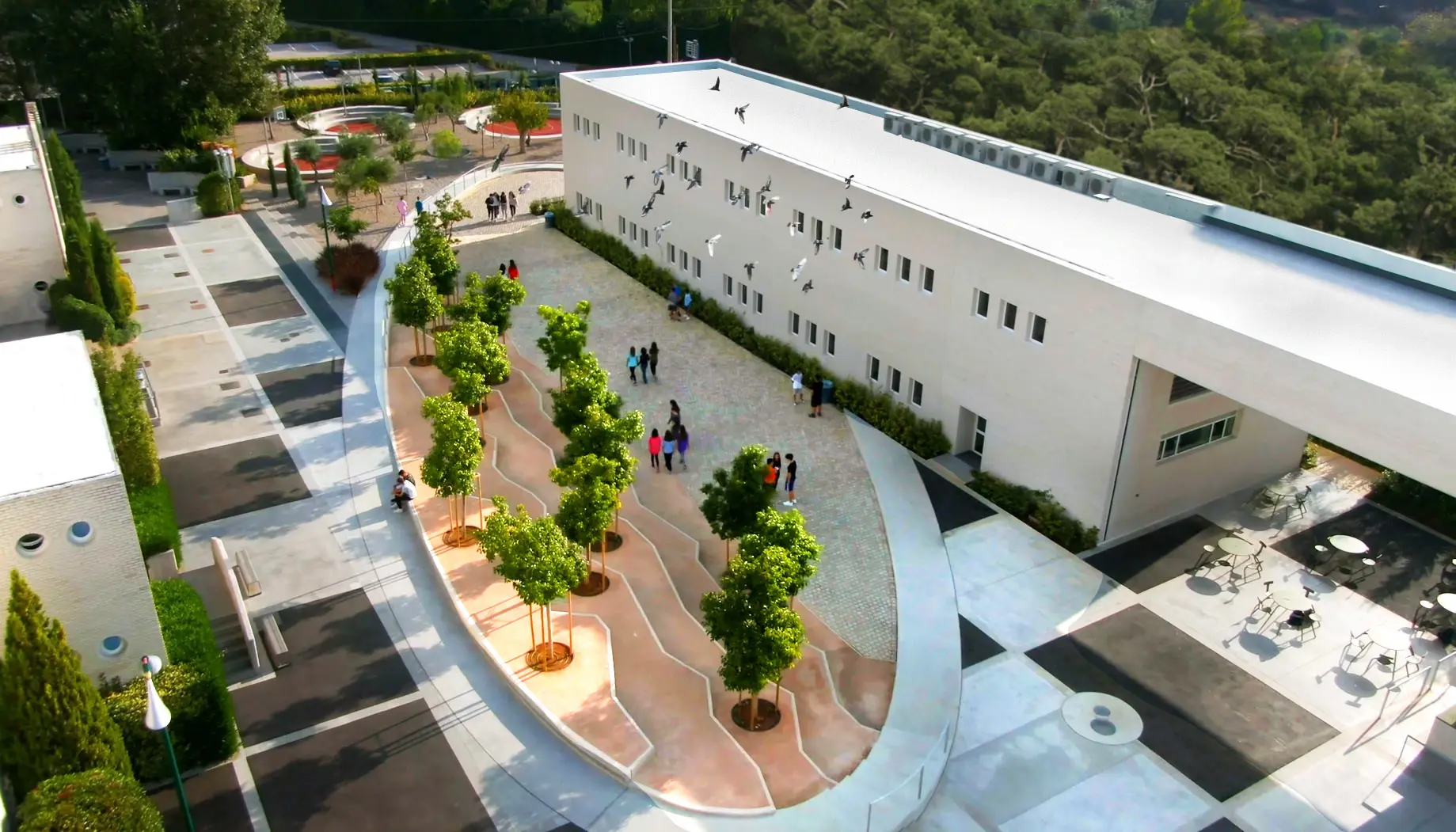
A major milestone came in the 2006–2007 academic year. For the first time, all educational levels were housed in new, unified facilities in Pallini, spanning 40,000 m². Kindergarten, Primary, Junior High School, and High School were relocated to brand-new buildings, which welcomed young and older students alike in September 2006. These buildings were designed to support the independent operation of each educational level. The infrastructure served the vision of a modern school with high standards, offering every possibility for enhancing the quality of education. In addition to classrooms, the new facilities include auxiliary rooms, IT labs, music rooms, art rooms, specially equipped laboratories for science and technology, amphitheaters, projection rooms, libraries, an event hall, an observatory, a rhythmic gymnastics hall, indoor gym, swimming pool, basketball, volleyball and tennis courts, football pitch, track and field facilities, and a dining hall.

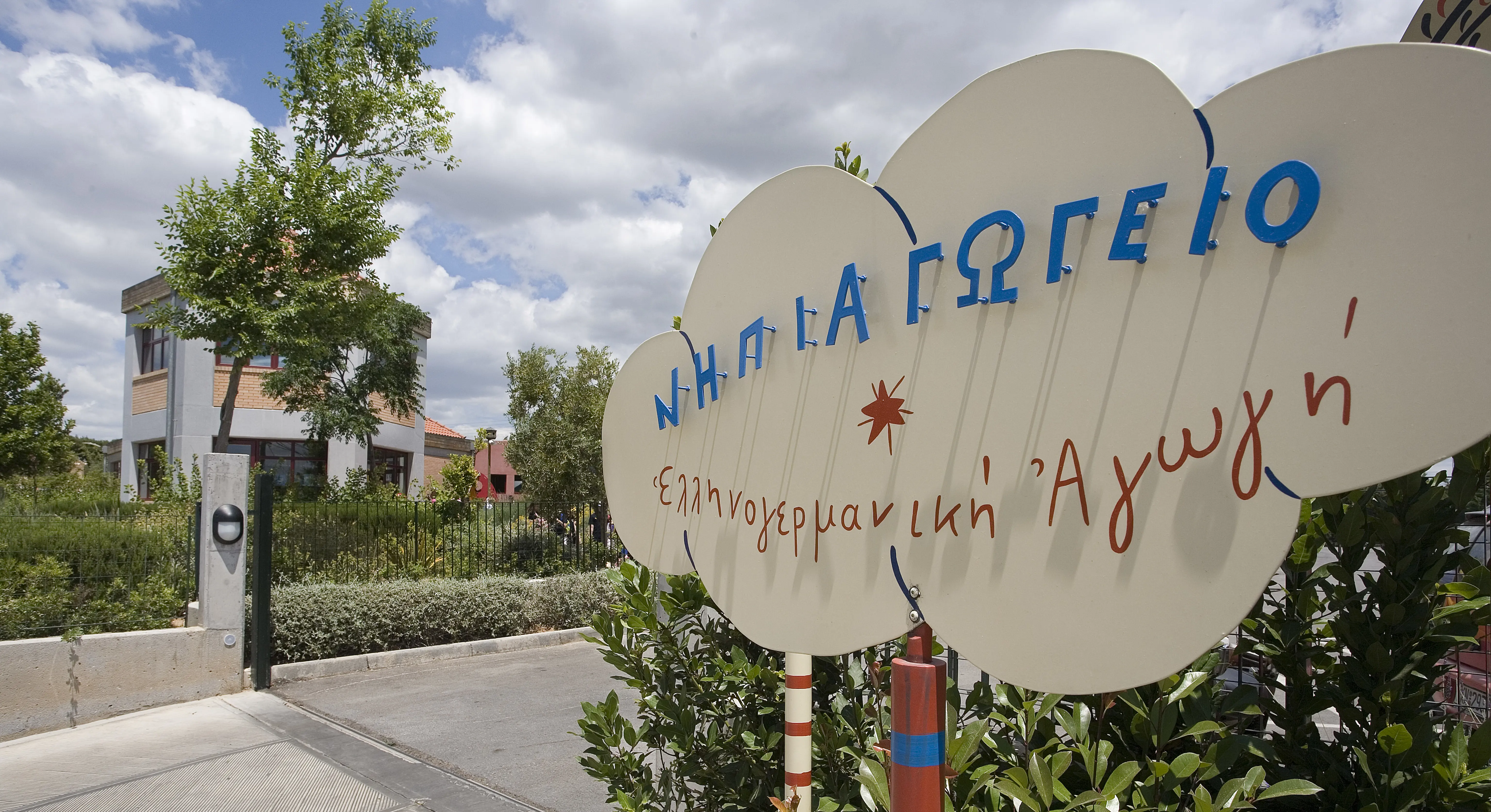
In a separate 6,000 m² area near the main complex, a modern preschool center welcomes toddlers and young children. The kindergarten offers a warm and welcoming environment for children experiencing school life for the first time. In addition to classrooms, it features a dance studio, dining hall, puppet theatre and dramatization room, rhythmic and psychomotor development room, outdoor playground, open-air theatre and biotope, a small chapel, and a specially designed pool for young children.

1998

Senior students participate in the DSDIΙ exams

2004

Establishment of the Conservatory of Ellinogermaniki Agogi

2006

All levels in single facilities in Pallini

2008

The school becomes a member of the PASCH network

2025

Ellinogermaniki Agogi joins ISP

In 2008, a new honor is awarded to the school. The German Federal Foreign Office launched the global PASCH network—Schools: Partners for the Future (PASCH - Schulen: Partner der Zukunft)—comprising 1,000 selected schools worldwide. Ellinogermaniki Agogi has been a member of the network since its establishment.

In 2012, the school made a significant decision to support its High School students by offering a comprehensive preparatory program for the national Panhellenic Examinations in the 2nd and 3rd grades of High School . Dividing students into small groups and providing intensive preparation during the academic year and summer holidays led to impressive results. The high university admission rates, our students’ leading performances in the Panhellenic Exams, and the awarding of DAAD scholarships once again validate the school as a choice of excellence.

In 2023, the increasing number of students in the Junior High School and High School led to another expansion. From the 2022–2023 school year, 3rd High School classes are housed in a separate building next to the main campus. The independent structure of this pivotal year reinforces the school’s already thorough and rigorous preparation of students for the Panhellenic Examinations.

The school continues its dynamic journey. Through constant innovation and tireless effort, it remains at the forefront of education—open to the challenges and aspirations of our times. Events focusing on contemporary global issues give students the opportunity to engage with and exchange ideas with key international figures such as the President of the European Parliament, the Foreign Minister of the Federal Republic of Germany, and the President of the European Investment Bank.

A long-term vision has become a reality. From a small rented building in Kypseli in 1961 with 33 students, Ellinogermaniki Agogi has evolved into a dynamic educational institution with 2,000 students, 265 educators, and 500 administrative staff.